
Žula je druh vyvretej horniny ťaženej pre svoju extrémnu pevnosť, hustotu, odolnosť a odolnosť voči korózii. Žula je však tiež veľmi všestranná – nie je určená len na štvorce a obdĺžniky! V skutočnosti s istotou pravidelne pracujeme s žulovými komponentmi navrhnutými v rôznych tvaroch, uhloch a krivkách – s vynikajúcimi výsledkami.
Through our state of the art processing, cut surfaces can be exceptionally flat. These qualities make granite the ideal material to create custom-size and custom-design machine bases and metrology components. Granite is:
■ obrobiteľné
■ presne ploché po rezaní a dokončení
■ odolný voči hrdzi
■ odolný
■ dlhotrvajúci
Žulové komponenty sa tiež ľahko čistia. Pri vytváraní vlastných dizajnov si určite vyberte žulu pre jej vynikajúce výhody.
ŠTANDARDY / APLIKÁCIE S VYSOKÝM OPOTREBOVANÍM
Žula, ktorú spoločnosť ZHHIMG používa na výrobu našich štandardných povrchových dosiek, má vysoký obsah kremeňa, ktorý poskytuje väčšiu odolnosť voči opotrebovaniu a poškodeniu. Naše farby Superior Black majú nízku mieru nasiakavosti, čím sa minimalizuje možnosť hrdzavenia vašich presných meradiel pri ich umiestňovaní na dosky. Farby žuly ponúkané spoločnosťou ZHHIMG spôsobujú menšie odlesky, čo znamená menšiu únavu očí pre osoby používajúce dosky. Pri výbere našich typov žuly sme zohľadnili tepelnú rozťažnosť, aby sme tento aspekt minimalizovali.
CUSTOM APPLICATIONS
Ak vaša aplikácia vyžaduje dosku s vlastnými tvarmi, závitovými vložkami, drážkami alebo iným obrábaním, mali by ste si vybrať materiál ako Black Jinan Black. Tento prírodný materiál ponúka vynikajúcu tuhosť, vynikajúce tlmenie vibrácií a lepšiu obrobiteľnosť.
Je dôležité poznamenať, že samotná farba nie je ukazovateľom fyzikálnych vlastností kameňa. Vo všeobecnosti farba žuly priamo súvisí s prítomnosťou alebo neprítomnosťou minerálov, čo nemusí mať žiadny vplyv na vlastnosti, ktoré robia z nej dobrý materiál na povrchové dosky. Existujú ružové, sivé a čierne žuly, ktoré sú vynikajúce na povrchové dosky, ako aj čierne, sivé a ružové žuly, ktoré sú úplne nevhodné na presné aplikácie. Kritické vlastnosti žuly, ktoré sa týkajú jej použitia ako materiálu na povrchové dosky, nemajú nič spoločné s farbou a sú nasledovné:
■ Tuhosť (priehyb pri zaťažení - indikovaný modulom pružnosti)
■ Tvrdosť
■ Hustota
■ Odolnosť proti opotrebovaniu
■ Stabilita
■ Pórovitosť
Testovali sme mnoho žulových materiálov a porovnávali sme ich. Nakoniec sme dospeli k záveru, že čierna žula z Jinanu je najlepší materiál, aký sme kedy poznali. Indická čierna žula a juhoafrická žula sú podobné čiernej žule z Jinanu, ale ich fyzikálne vlastnosti sú horšie ako u čiernej žuly z Jinanu. ZHHIMG bude naďalej hľadať ďalšie žulové materiály na svete a porovnávať ich fyzikálne vlastnosti.
Ak chcete získať viac informácií o žule, ktorá je pre váš projekt vhodná, kontaktujte nás.info@zhhimg.com.
Rôzni výrobcovia používajú rôzne normy. Na svete existuje veľa noriem.
Norma DIN, ASME B89.3.7-2013 alebo federálna špecifikácia GGG-P-463c (žulové povrchové dosky) a podobne ako základ pre ich špecifikácie.
A vieme vyrobiť presnú kontrolnú dosku z žuly podľa vašich požiadaviek. Ak sa chcete dozvedieť viac informácií o ďalších normách, neváhajte nás kontaktovať.
Rovinnosť možno považovať za všetky body na povrchu, ktoré sa nachádzajú v dvoch rovnobežných rovinách, základnej rovine a rovine strechy. Meranie vzdialenosti medzi rovinami predstavuje celkovú rovinnosť povrchu. Toto meranie rovinnosti má zvyčajne toleranciu a môže zahŕňať označenie stupňa.
Napríklad tolerancie rovinnosti pre tri štandardné triedy sú definované vo federálnej špecifikácii podľa nasledujúceho vzorca:
■ Laboratórna trieda AA = (40 + uhlopriečka na druhú / 25) x 0,000001" (jednostranne)
■ Stupeň kontroly A = Laboratórny stupeň AA x 2
■ Nástrojáreň triedy B = Laboratórna trieda AA x 4.
Pre štandardné rozmery povrchových dosiek garantujeme tolerancie rovinnosti, ktoré presahujú požiadavky tejto špecifikácie. Okrem rovinnosti sa norma ASME B89.3.7-2013 a federálna špecifikácia GGG-P-463c zaoberajú témami vrátane: presnosti opakovaného merania, materiálových vlastností žulových povrchových dosiek, povrchovej úpravy, umiestnenia oporných bodov, tuhosti, prijateľných metód kontroly, inštalácie závitových vložiek atď.
Žulové povrchové dosky a žulové inšpekčné dosky ZHHIMG spĺňajú alebo prekračujú všetky požiadavky stanovené v tejto špecifikácii. V súčasnosti neexistuje žiadna definujúca špecifikácia pre žulové uhlové dosky, rovnobežky alebo štvorce.
A vzorce pre ďalšie štandardy nájdete vSTIAHNUŤ.
Po prvé, je dôležité udržiavať dosku čistú. Vzdušný abrazívny prach je zvyčajne najväčším zdrojom opotrebenia dosky, pretože má tendenciu zachytávať sa v obrobkoch a kontaktných plochách meradiel. Po druhé, dosku zakryte, aby ste ju chránili pred prachom a poškodením. Životnosť opotrebenia sa dá predĺžiť zakrytím dosky, keď sa nepoužíva, pravidelným otáčaním dosky, aby sa jedna oblasť nadmerne nepoužívala, a výmenou oceľových kontaktných podložiek na meradle za karbidové podložky. Taktiež sa vyhnite umiestňovaniu jedla alebo nealkoholických nápojov na dosku. Upozorňujeme, že mnohé nealkoholické nápoje obsahujú kyselinu uhličitú alebo kyselinu fosforečnú, ktoré môžu rozpúšťať mäkšie minerály a zanechávať na povrchu malé jamky.
Záleží to od toho, ako sa tanier používa. Ak je to možné, odporúčame čistiť tanier na začiatku dňa (alebo pracovnej zmeny) a znova na konci. Ak sa tanier znečistí, najmä olejovými alebo lepkavými tekutinami, mal by sa pravdepodobne okamžite vyčistiť.
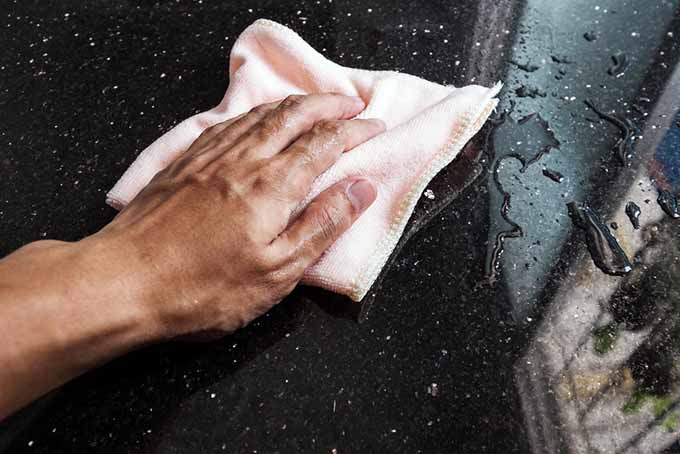
Platňu pravidelne čistite tekutým čističom platní alebo bezvodým čističom povrchov platní ZHHIMG. Výber čistiacich roztokov je dôležitý. Ak sa použije prchavé rozpúšťadlo (acetón, riedidlo laku, alkohol atď.), odparovanie ochladí povrch a zdeformuje ho. V takom prípade je potrebné platňu pred použitím normalizovať, inak sa vyskytnú chyby v meraní.
Čas potrebný na normalizáciu platne sa bude líšiť v závislosti od jej veľkosti a množstva chladenia. Pre menšie platne by mala stačiť hodina. Pre väčšie platne môžu byť potrebné dve hodiny. Ak sa použije čistiaci prostriedok na vodnej báze, dôjde aj k určitému odparovaciemu chladeniu.
Doska tiež zadržiava vodu, čo môže spôsobiť hrdzavenie kovových častí, ktoré sú v kontakte s povrchom. Niektoré čistiace prostriedky tiež po zaschnutí zanechávajú lepkavé zvyšky, ktoré priťahujú prach zo vzduchu a v skutočnosti zvyšujú opotrebenie, namiesto toho, aby ho znižovali.
Závisí to od používania dosky a prostredia. Odporúčame, aby nová doska alebo presné žulové príslušenstvo prešli úplnou rekalibráciou do jedného roka od zakúpenia. Ak bude žulová doska intenzívne používaná, môže byť vhodné skrátiť tento interval na šesť mesiacov. Mesačná kontrola opakovaných chýb merania pomocou elektronickej vodováhy alebo podobného zariadenia odhalí všetky vznikajúce miesta opotrebenia a trvá len niekoľko minút. Po určení výsledkov prvej rekalibrácie sa kalibračný interval môže predĺžiť alebo skrátiť podľa toho, čo povoľuje alebo vyžaduje váš interný systém kvality.
Ponúkame služby, ktoré vám pomôžu s kontrolou a kalibráciou vašej žulovej povrchovej dosky.

Existuje niekoľko možných príčin odchýlok medzi kalibráciami:
- Povrch bol pred kalibráciou umytý horúcim alebo studeným roztokom a nebol mu poskytnutý dostatočný čas na normalizáciu.
- Doska je nesprávne podopretá
- Zmena teploty
- Koncepty
- Priame slnečné svetlo alebo iné sálavé teplo na povrchu taniera. Uistite sa, že stropné osvetlenie nezahrieva povrch.
- Zmeny vertikálneho teplotného gradientu medzi zimou a letom (Ak je to možné, poznajte vertikálny teplotný gradient v čase kalibrácie.)
- Doske nebol po preprave poskytnutý dostatočný čas na normalizáciu
- Nesprávne používanie kontrolného zariadenia alebo používanie nekalibrovaného zariadenia
- Zmena povrchu v dôsledku opotrebovania
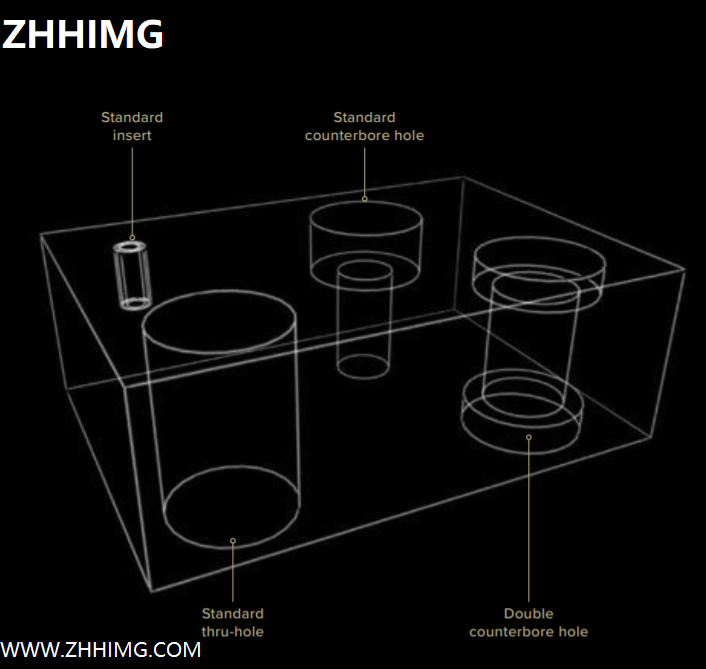
Koľko druhov otvorov je na presnej žule?
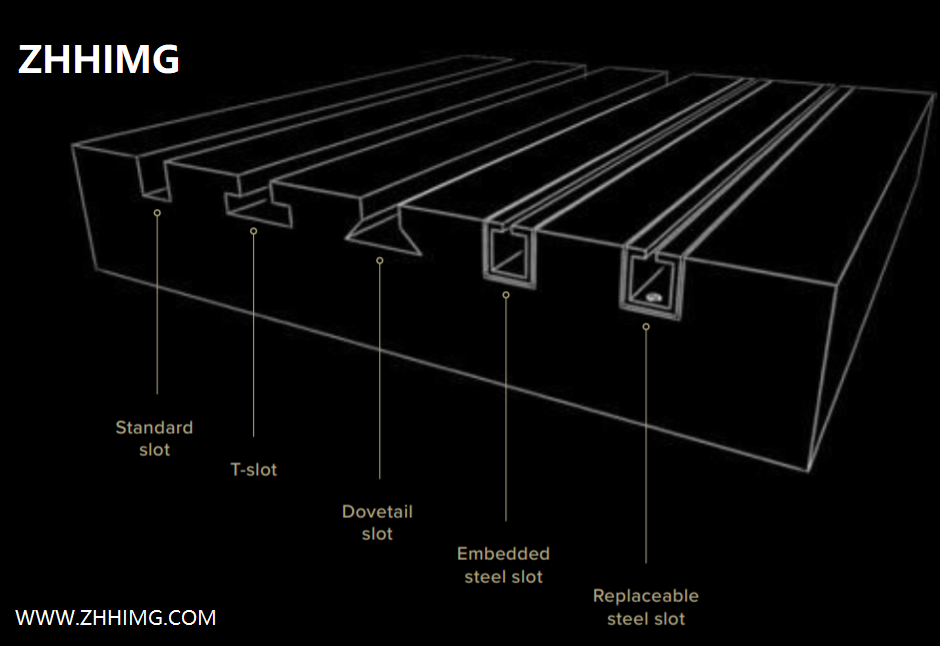
Drážky na presných žulových komponentoch
V mnohých továrňach, kontrolných miestnostiach a laboratóriách sa presné žulové povrchové dosky spoliehajú ako základ pre presné meranie. Pretože každé lineárne meranie závisí od presného referenčného povrchu, z ktorého sa odoberajú konečné rozmery, povrchové dosky poskytujú najlepšiu referenčnú rovinu pre kontrolu a rozmiestnenie obrobku pred obrábaním. Sú tiež ideálnym podkladom pre meranie výšky a meranie plôch. Okrem toho, vysoký stupeň rovinnosti, stability, celkovej kvality a spracovania z nich robí dobrú voľbu pre montáž sofistikovaných mechanických, elektronických a optických meracích systémov. Pre ktorýkoľvek z týchto meracích procesov je nevyhnutné udržiavať povrchové dosky kalibrované.
Repeat Measurements and Flatness
Pre zabezpečenie presného povrchu sú kľúčové merania rovinnosti aj opakované merania. Rovinnosť možno považovať za všetky body na povrchu, ktoré sa nachádzajú v dvoch rovnobežných rovinách, základnej rovine a rovine strechy. Meranie vzdialenosti medzi rovinami predstavuje celkovú rovinnosť povrchu. Toto meranie rovinnosti má bežne toleranciu a môže zahŕňať označenie triedy.
The flatness tolerances for three standard grades are defined in the federal specification as determined by the following formula:
Norma DIN, norma GB, norma ASME, norma JJS... rôzne krajiny s rôznymi štandardmi...
In addition to flatness, repeatability must be ensured. A repeat measurement is a measurement of local flatness areas. It is a measurement taken anywhere on the surface of a plate that will repeat within the stated tolerance. Controlling local area flatness to a tighter tolerance than overall flatness guarantees a gradual change in surface flatness profile, thereby minimizing local errors.
Aby sa zabezpečilo, že povrchová doska spĺňa špecifikácie rovinnosti aj opakovaného merania, výrobcovia žulových povrchových dosiek by mali ako základ pre svoje špecifikácie použiť federálnu špecifikáciu GGG-P-463c. Táto norma sa zaoberá presnosťou opakovaného merania, materiálovými vlastnosťami žulových povrchových dosiek, povrchovou úpravou, umiestnením oporných bodov, tuhosťou, prijateľnými metódami kontroly a montážou závitových vložiek.
Checking Plate Accuracy
Dodržiavaním niekoľkých jednoduchých pokynov by investícia do žulovej povrchovej dosky mala vydržať mnoho rokov. Frekvencia kontroly presnosti povrchovej dosky sa líši v závislosti od používania dosky, prostredia v dielni a požadovanej presnosti. Všeobecným pravidlom je, že nová doska by mala byť kompletne rekalibrovaná do jedného roka od zakúpenia. Ak sa doska používa často, odporúča sa tento interval skrátiť na šesť mesiacov.
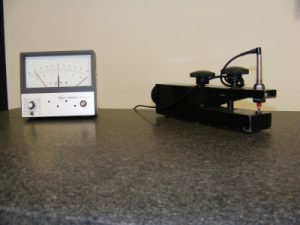
Before a surface plate has worn beyond specification for overall flatness, it will show worn or wavy posts. Monthly inspection for repeat measurement errors using a repeat reading gage will identify wear spots. A repeat reading gage is a high-precision instrument that detects local error and can be displayed on a high magnification electronic amplifier.
An effective inspection program should include regular checks with an autocollimator, providing actual calibration of overall flatness traceable to National Institute of Standards and Technology (NIST). Comprehensive calibration by the manufacturer or an independent company is necessary from time to time.
Variations Between Calibrations
V niektorých prípadoch existujú rozdiely medzi kalibráciami povrchových dosiek. Niekedy môžu byť tieto rozdiely vysvetlené faktormi, ako je zmena povrchu v dôsledku opotrebovania, nesprávne použitie kontrolného zariadenia alebo použitie nekalibrovaného zariadenia. Dva najčastejšie faktory sú však teplota a podpera.
One of the most important variables is temperature. For instance, the surface might have been washed with a hot or cold solution prior to calibration and not allowed sufficient time to normalize. Other causes of temperature change include drafts of cold or hot air, direct sunlight, overhead lighting or other sources of radiant heat on the surface of the plate.
There also can be variations in the vertical temperature gradient between winter and summer. In some cases, the plate is not allowed sufficient time to normalize after shipment. It is a good idea to record the vertical gradient temperature at the time the calibration is performed.
Another common cause for calibration variation is a plate that is improperly supported. A surface plate should be supported at three points, ideally located 20% of the length in from the ends of the plate. Two supports should be located 20% of the width in from the long sides, and the remaining support should be centered.
Only three points can rest solidly on anything but a precision surface. Attempting to support the plate at more than three points will cause the plate to receive its support from various combinations of three points, which will not be the same three points on which it was supported during production. This will introduce errors as the plate deflects to conform to the new support arrangement. Consider using steel stands with support beams designed to line up with the proper support points. Stands for this purpose are generally available from the surface plate manufacturer.
If the plate is properly supported, precise leveling is only necessary if an application specifies it. Leveling is not necessary to maintain the accuracy of a properly supported plate.
Extend Plate Life
Dodržiavanie niekoľkých pokynov zníži opotrebovanie žulovej dosky a v konečnom dôsledku predĺži jej životnosť.
V prvom rade je dôležité udržiavať plech čistý. Vzdušný abrazívny prach je zvyčajne najväčším zdrojom opotrebenia plechu, pretože má tendenciu sa zachytávať v obrobkoch a kontaktných povrchoch meradiel.
It also is important to cover plates to protect it from dust and damage. Wear life can be extended by covering the plate when not in use.
Platňu pravidelne otáčajte, aby sa jedna oblasť nadmerne nepoužívala. Taktiež sa odporúča vymeniť oceľové kontaktné podložky na meradle za karbidové podložky.
Avoid setting food or soft drinks on the plate. Many soft drinks contain either carbonic or phosphoric acid, which can dissolve the softer minerals and leave small pits in the surface.
Where to Relap
Keď je potrebné opraviť povrch žulovej dosky, zvážte, či si túto službu nechať vykonať na mieste alebo v kalibračnom zariadení. Vždy je lepšie nechať dosku opraviť v továrni alebo v špecializovanom zariadení. Ak však doska nie je príliš opotrebovaná, zvyčajne v rámci požadovanej tolerancie 0,001 palca, je možné ju opraviť na mieste. Ak je doska opotrebovaná do bodu, keď je o viac ako 0,001 palca mimo tolerancie, alebo ak je silne poškodená jamkami alebo zárezmi, mala by sa pred opätovným opracovaním poslať do továrne na brúsenie.
A calibration facility has the equipment and factory setting providing the optimum conditions for proper plate calibration and rework if necessary.
Pri výbere technika pre kalibráciu a obnovu povrchu na mieste by sa mala postupovať s veľkou starostlivosťou. Požiadajte o akreditáciu a overte, či zariadenie, ktoré bude technik používať, má dohľadateľnú kalibráciu. Dôležitým faktorom sú aj skúsenosti, pretože naučenie sa správneho lapovania presnej žuly trvá mnoho rokov.
Critical measurements start with a precision granite surface plate as a baseline. By ensuring a reliable reference by using a properly calibrated surface plate, manufacturers have one of the essential tools for reliable measurements and better quality parts.Q
Checklist for Calibration Variations
1. Povrch bol pred kalibráciou umytý horúcim alebo studeným roztokom a nebol mu poskytnutý dostatočný čas na normalizáciu.
2. Doska nie je správne podopretá.
3. Zmena teploty.
4. Návrhy.
5. Priame slnečné svetlo alebo iné sálavé teplo na povrchu taniera. Uistite sa, že stropné osvetlenie nezohrieva povrch.
6. Zmeny vertikálneho teplotného gradientu medzi zimou a letom. Ak je to možné, poznajte vertikálny teplotný gradient v čase kalibrácie.
7. Doske nebol po preprave poskytnutý dostatočný čas na normalizáciu.
8. Nesprávne používanie kontrolného zariadenia alebo používanie nekalibrovaného zariadenia.
9. Zmena povrchu v dôsledku opotrebovania.
Tech Tips
- Pretože každé lineárne meranie závisí od presnej referenčnej plochy, z ktorej sa odoberajú konečné rozmery, povrchové dosky poskytujú najlepšiu referenčnú rovinu pre kontrolu a rozloženie obrobku pred obrábaním.
- Controlling local area flatness to a tighter tolerance than overall flatness guarantees a gradual change in surface flatness profile, thereby minimizing local errors.
- Efektívny inšpekčný program by mal zahŕňať pravidelné kontroly autokolimátorom, ktoré zabezpečia skutočnú kalibráciu celkovej rovinnosti s následnosťou k národnému inšpekčnému orgánu.
Medzi minerálnymi časticami, ktoré tvoria žulu, viac ako 90 % tvoria živec a kremeň, z ktorých je najviac živec. Živec je často biely, sivý a telovočervený a kremeň je väčšinou bezfarebný alebo sivobiely, čo tvorí základnú farbu žuly. Živec a kremeň sú tvrdé minerály a je ťažké ich pohybovať oceľovým nožom. Pokiaľ ide o tmavé škvrny v žule, najmä čiernu sľudu, existujú aj iné minerály. Hoci je biotit relatívne mäkký, jeho schopnosť odolávať namáhaniu nie je slabá a zároveň je v žule malé množstvo, často menej ako 10 %. Toto je materiálový stav, v ktorom je žula obzvlášť pevná.
Ďalším dôvodom, prečo je žula pevná, je to, že jej minerálne častice sú navzájom pevne spojené a sú v sebe zapustené. Póry často tvoria menej ako 1 % celkového objemu horniny. Vďaka tomu je žula schopná odolávať silnému tlaku a vlhkosť ňou ľahko nepreniká.
Žulové komponenty sú vyrobené z kameňa bez hrdze, odolnosti voči kyselinám a zásadám, dobrej odolnosti voči opotrebovaniu a dlhej životnosti, nevyžadujú si špeciálnu údržbu. Presné žulové komponenty sa väčšinou používajú v nástrojárskom priemysle. Preto sa nazývajú presné žulové komponenty alebo žulové komponenty. Vlastnosti presných žulových komponentov sú v podstate rovnaké ako vlastnosti žulových plošín. Úvod do nástrojárstva a merania presných žulových komponentov: Presné obrábanie a technológia mikroobrábania sú dôležitými smermi vývoja strojárskeho priemyslu a stali sa dôležitým ukazovateľom na meranie úrovne high-tech. Vývoj špičkových technológií a obranného priemyslu je neoddeliteľnou súčasťou presného obrábania a technológie mikroobrábania. Žulové komponenty sa pri meraní dajú plynulo posúvať bez stagnácie. Meranie pracovnej plochy, bežné škrabance neovplyvňujú presnosť merania. Žulové komponenty musia byť navrhnuté a vyrobené podľa požiadaviek dopytu.
Oblasť použitia:
Ako všetci vieme, stále viac strojov a zariadení si vyberá presné žulové komponenty.
Žulové komponenty sa používajú pre dynamický pohyb, lineárne motory, sústružnícke centrá, cnc, laserové stroje...
Pre viac informácií nás prosím kontaktujte.
Meracie prístroje a mechanické komponenty z žuly sú vyrobené z vysoko kvalitnej čiernej žuly Jinan. Vďaka svojej vysokej presnosti, dlhej životnosti, dobrej stabilite a odolnosti voči korózii sa čoraz viac používajú pri kontrole výrobkov v modernom priemysle a vo vedeckých oblastiach, ako je mechanický, letecký a kozmický priemysel a vedecký výskum.
Výhody
----Dvakrát tvrdšie ako liatina;
----Minimálne zmeny rozmerov sú spôsobené zmenami teploty;
----Bez žmýkania, takže nedochádza k prerušeniu práce;
----Bez otrepov alebo výčnelkov vďaka jemnozrnnej štruktúre a nevýznamnej lepivosti, čo zaisťuje vysoký stupeň rovinnosti počas dlhej životnosti a nespôsobuje žiadne poškodenie iných častí alebo nástrojov;
----Bezproblémová prevádzka pri použití s magnetickými materiálmi;
----Dlhá životnosť a odolnosť voči hrdzi, čo vedie k nízkym nákladom na údržbu.
Presné žulové povrchové dosky sú precízne lapované do vysokého štandardu rovinnosti, aby sa dosiahla presnosť, a používajú sa ako základ pre montáž sofistikovaných mechanických, elektronických a optických meracích systémov.
Niektoré z jedinečných vlastností povrchovej dosky z žuly:
Jednotnosť tvrdosti;
Presné podmienky pri zaťažení;
Absorpčný materiál pre vibrácie;
Ľahko sa čistí;
Odolné voči obaleniu;
Nízka pórovitosť;
Neabrazívne;
Nemagnetické
Výhody povrchovej dosky z žuly
First, the rock after a long period of natural aging, uniform structure, coefficient minimum, the internal stress completely disappear, not deformed, so the precision is high.
Odoslať e-mail
Skype
Angličtina
Nemčina
Francúzština
Portugalčina
španielčina
Japončina
kórejčina
arabčina
Írsky
gréčtina
Turecký
taliančina
Dánčina
Rumunčina
Indonézština
čeština
Švédsky
poľština
Baskičtina
Katalánčina
Esperanto
Hindčina
Lao
Albánčina
Amharčina
Arménčina
Azerbajdžančina
Bieloruský
PBengálčina
Bosniacky
Bulharčina
Cebuánčina
Čičeva
Korzický
Chorvátčina
Holandčina
Estónčina
Filipínčina
Fínčina
Frízčina
Galícijčina
Gruzínska
Gudžarátčina
Haitský
Hausa
HavajskáHebrejčinaHmong
maďarčinaIslandčinaIgbčina
JávčinaKannadčina
Kazaština
Khmérčina
Kurdčina
Kirgizčina
Latinčina
Lotyština
Litovčina
Luxembursko..
Macedónčina
Madagaskarčina
Malajčina
Malajálamčina
Maltčina
Maorčina
Maráthčina
Mongolčina
Barmčina
Nepálčina
Nórčina
Paštčina
Perzština
Pandžábčina
Srbčina
Sesotho
Sinhálčina
Slovák
- slovinčina
- Somálčina
- Samojčina
- škótska gaelčina
- Šónčina
- Sindhčina
- Sundčina
- Svahilčina
- Tadžický
- Tamilčina
- Telugčina
Thajčina
Ukrajinčina
UrdčinaAUzbečtina2VietnamčinaLWaleštinaAXhoština
Jidiš
Jorubčina
Zulu
Kinyarwanda
Tatár
Turkménov
Ujgurčina
Čínština
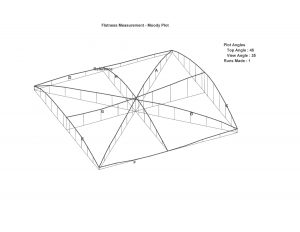
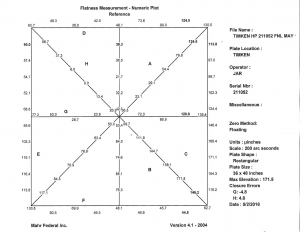
Routine surface plate calibration is necessary to ensure flatness and repeatability over time. The precision measurement group at Cross is ISO 17025 accredited for calibration of surface plate flatness and repeatability. We utilize the Mahr Surface Plate Certification System featuring:
- Moody and Profile Analysis,
- Isometric or Numeric plots,
- Multiple Run Average, and
- Automatic Grading According to Industry Standards.
The Mahr Computer Assisted Model determines any angular or linear deviation from absolute level, and is ideally suited for highly precise profiling of surface plates.
Intervals between calibrations will vary depending on the frequency of use, the environmental conditions where the plate is located, and the specific quality requirements of your company. Properly maintaining your surface plate may allow for longer intervals between each calibration, helps you avoid the added cost of relapping, and most importantly ensures the measurements you obtain on the plate are as accurate as possible. Although surface plates appear robust, they are precision instruments and should be treated as such. Here are some things to consider regarding care of your surface plates:
- Keep the plate clean, and if possible cover it when it is not in use
- Nothing should be placed on the plate other than gages or pieces to be measured.
- Don’t use the same spot on the plate every time.
- If possible, rotate the plate periodically.
- Respect the load limit of your plate
Precision Granite Base Can Improve Machine Tool Performances
Requirements are constantly increasing in mechanical engineering in general and in machine tool construction in particular. Achieving maximum precision and performance values without increasing costs are constant challenges to being competitive. The machine tool bed is a decisive factor here. Therefore, more and more machine tool manufacturers are relying on granite. Due to its physical parameters, it offers clear advantages that cannot be achieved with steel or polymer concrete.
Granite is a so-called volcanic deep rock and has a very dense and homogeneous structure with an extremely low coefficient of expansion, low thermal conductivity and high vibration damping.
Below you will discover why the common opinion that granite is mainly only suitable as machine base for high-end coordinate measuring machines is long outdated and why this natural material as a machine tool base is a very advantageous alternative to steel or cast iron even for high-precision machine tools.
We can manufacture granite components for dynamic motion, granite components for linear motors, granite components for ndt, granite components for xray, granite components for cmm, granite components for cnc, granite precision for laser, granite components for aerospace, granite components for precision stages...
High Added Value Without Additional Costs
The increasing use of granite in mechanical engineering is not so much due to the massive increase in the price of steel. Rather, it is because the added value for the machine tool achieved with a machine bed made of granite is possible at very little or no extra cost. This is proven by cost comparisons of well-known machine tool manufacturers in Germany and Europe.
The considerable gain in thermodynamic stability, vibration damping and long-term precision made possible by granite cannot be achieved with a cast iron or steel bed, or only at relatively high cost. For example, thermal errors can account for up to 75% of the total error of a machine, with compensation often attempted for by software – with moderate success. Due to its low thermal conductivity, granite is the better foundation for long-term precision.
With a tolerance of 1 μm, granite easily meets the flatness requirements according to DIN 876 for the degree of accuracy 00. With a value of 6 on the hardness scale 1 to 10, it is extremely hard, and with its specific weight of 2.8g/cm³ it almost reaches the value of aluminium. This also results in additional advantages such as higher feed rates, higher axis accelerations and an extension of the tool life for cutting machine tools. Thus, the change from a cast bed to a granite machine bed moves the machine tool in question into the high-end class in terms of precision and performance – at no extra cost.
Granite’s Improved Ecological Footprint
In contrast to materials such as steel or cast iron, natural stone does not have to be produced with a great deal of energy and using additives. Only relatively small amounts of energy are required for quarrying and surface treatment. This results in a superior ecological footprint, which even at the end of a machine’s life surpasses that of steel as a material. The granite bed can be the basis for a new machine or be used for completely different purposes such as shredding for road construction.
Nor are there any shortages of resources for granite. It is a deep rock formed from magma within the earth’s crust. It has ‘matured’ for millions of years and is available in very large quantities as a natural resource on almost all continents, including all of Europe.
Conclusion: The numerous demonstrable advantages of granite compared to steel or cast iron justify the increasing willingness of mechanical engineers to use this natural material as a foundation for high-precision, high-performance machine tools. Detailed information about granite properties, which are advantageous for machine tools and mechanical engineering, can be found in this further article.
A repeat measurement is a measurement of local flatness areas. The Repeat Measurement specification states that a measurement taken anywhere on the surface of a plate will repeat within the stated tolerance. Controlling local area flatness tighter than overall flatness guarantees a gradual change in surface flatness profile thereby minimizing local errors.
Most manufacturers, including imported brands, adhere to the Federal Specification of overall flatness tolerances but many overlook the repeat measurements. Many of the low value or budget plates available in the market today will not guarantee repeat measurements. A manufacturer who does not guarantee repeat measurements is NOT producing plates that meet the requirements of ASME B89.3.7-2013 or Federal Specification GGG-P-463c, or DIN 876, GB, JJS...
Both are critical to ensure a precision surface for accurate measurements. Flatness specification alone is not sufficient to guarantee measurement accuracy. Take as an example, a 36 X 48 Inspection Grade A surface plate, which meets ONLY the flatness specification of .000300". If the piece being checked bridges several peaks, and the gage being used is in a low spot, the measurement error could be the full tolerance in one area, 000300"! Actually, it can be much higher if the gage is resting on the slope of an incline.
Errors of .000600"-.000800" are possible, depending upon the severity of the slope, and the arm length of the gage being used. If this plate had a Repeat Measurement specification of .000050"F.I.R. then the measurement error would be less than .000050" regardless of where the measurement is taken on the plate. Another problem, which usually arises when an untrained technician attempts to resurface a plate on-site, is the use of Repeat Measurements alone to certify a plate.
The instruments that are used to verify repeatability are NOT designed to check overall flatness. When set to zero on a perfectly curved surface, they will continue to read zero, whether that surface is perfectly flat or perfectly concave or convex 1/2"! They simply verify the uniformity of the surface, not the flatness. Only a plate that meets both the flatness specification AND the repeat measurement specification truly meets the requirements of ASME B89.3.7-2013 or Federal Specification GGG-P-463c.
Ask us about or flatness specification and repeat measurement promise by calling +86 19969991659 or emailing INFO@ZHHIMG.COM
Yes, but they can only be guaranteed for a specific vertical temperature gradient. The effects of thermal expansion on the plate could easily cause a change in accuracy greater than the tolerance if there is a change in the gradient. In some cases, if the tolerance is tight enough, the heat absorbed from overhead lighting can cause enough of a gradient change over several hours.
Granite has a coefficient of thermal expansion of approximately .0000035 inches per inch per 1°F. As an example: A 36" x 48" x 8" surface plate has an accuracy of .000075" (1/2 of Grade AA) at a gradient of 0°F, the top and bottom are the same temperature. If the top of the plate warms up to the point where it is 1°F warmer than the bottom, the accuracy would change to .000275" convex ! Therefore, ordering a plate with a tolerance tighter than Laboratory Grade AA should only be considered if there is adequate climate control.
A surface plate should be supported at 3 points, ideally located 20% of the length in from the ends of the plate. Two supports should be located 20% of the width in from the long sides, and the remaining support should be centered. Only 3 points can rest solidly on anything but a precision surface.
The plate should be supported at these points during production, and it should be supported only at these three points while in use. Attempting to support the plate at more than three points will cause the plate to receive its support from various combinations of three points, which will not be the same 3 points on which it was supported during production. This will introduce errors as the plate deflects to conform to the new support arrangement. All zhhimg steel stands have support beams designed to line up with the proper support points.
If the plate is properly supported, precise leveling is only necessary if your application calls for it. Leveling is not necessary to maintain the accuracy of a properly supported plate.
Why Choose Granite for Machine Bases and Metrology Components?
The answer is 'yes' for almost every application. The advantages of granite include: No rust or corrosion, almost immune to warping, no compensating hump when nicked, longer wear life, smoother action, greater precision, virtually non-magnetic, low co-efficient of thermal expansion, and low maintenance cost.
Granite is a type of igneous rock quarried for its extreme strength, density, durability, and resistance to corrosion. But granite is also very versatile– it’s not just for squares and rectangles! In fact, Starrett Tru-Stone confidently works with granite components engineered in shapes, angles, and curves of all variations on a regular basis—with excellent outcomes.
Through our state of the art processing, cut surfaces can be exceptionally flat. These qualities make granite the ideal material to create custom-size and custom-design machine bases and metrology components. Granite is:
machineable
precisely flat when cut and finished
rust resistant
durable
long lasting
Granite components are also easy to clean. When creating custom designs, be sure to choose granite for its superior benefits.
STANDARDS / HIGH WEAR APPLICATIONS
The granite utilized by ZhongHui for our standard surface plate products has high quartz content, which provides greater resistance to wear and damage. Our Superior Black and Crystal Pink colors have low water absorption rates, minimizing the possibility of your precision gages rusting while setting on the plates. The colors of granite offered by ZhongHui result in less glare, which means less eyestrain for individuals using the plates. We have chosen our granite types while considering thermal expansion in an effort to keep this aspect minimal.
CUSTOM APPLICATIONS
When your application calls for a plate with custom shapes, threaded inserts, slots or other machining, you’ll want to select a material like Black Diabase. This natural material offers superior stiffness, excellent vibration dampening, and improved machinability.
Yes, if they are not too badly worn. Our factory setting and equipment allow the optimum conditions for proper plate calibration and rework if necessary. Generally, if a plate is within .001" of the required tolerance, it can be resurfaced on-site. If a plate is worn to the point where it is more than .001" out of tolerance, or if it is badly pitted or nicked, then it will need to be sent to the factory for grinding prior to relapping.
Great care should be exercised in selecting an on-site calibration and resurfacing technician. We urge you to use caution in selecting your calibration service. Ask for accreditation and verify the equipment that the technician will use has a National Inspection Institution traceable calibration. It takes many years to learn how to properly lap precision granite.
ZhongHui provides quick turn-around on calibrations performed in our factory. Send your plates in for calibration if possible. Your quality and reputation depend on the accuracy of your measurement instruments including surface plates!
Our black surface plates have a significantly higher density and are up to three times as stiff. Therefore, a plate made of the black does not need to be as thick as a granite plate of the same size to have equal or greater resistance to deflection. Reduced thickness means less weight and lower shipping costs.
Beware of others who use lower quality black granite in the same thickness. As stated above, properties of granite, like wood or metal, vary by material and color, and is not an accurate predictor of stiffness, hardness, or wear resistance. In fact, many types of black granite and diabase are very soft and not suitable for surface plate applications.
No. The specialized equipment and training necessary to rework these items requires that they be returned to the factory for calibration and rework.
Yes. Ceramic and granite have similar characteristics, and the methods used to calibrate and lap granite can be used with ceramic items as well. Ceramics are more difficult to lap than granite resulting in a higher cost.
Yes, provided that the inserts are recessed below the surface. If steel inserts are flush with, or above the surface plane, they must be spot-faced down before the plate can be lapped. If required, we can provide that service.
Yes. Steel inserts with the desired thread (English or metric) can be epoxy bonded into the plate at the desired locations. ZhongHui uses CNC machines to provide the tightest insert locations within +/- 0.005”. For less critical inserts, our locational tolerance for threaded inserts is ±.060". Other options include steel T-Bars and dovetail slots machined directly into the granite.
Inserts that are properly bonded using high strength epoxy and good workmanship will withstand a great deal of torsional and shear force. In a recent test, using 3/8"-16 threaded inserts, an independent testing laboratory measured the force required to pull an epoxy-bonded insert from a surface plate. Ten plates were tested. Out of these ten, in nine cases, the granite fractured first. The average load at the point of failure was 10,020 lbs. for gray granite and 12,310 lbs. for black. In the single case where an insert pulled free of the plate, the load at the point of failure was 12,990 lbs.! If a work piece forms a bridge across the insert and extreme torque is applied, it is possible to generate enough force to fracture the granite. Partially for this reason, ZhongHui gives guidelines for the maximum safe torque that can be applied the epoxy bonded inserts: https://www.zhhimg.com/standard-thread-inserts-product/
Yes, but only at our factory. At our plant, we can restore almost any plate to 'like-new' condition, usually for less than half the cost of replacing it. Damaged edges can be cosmetically patched, deep grooves, nicks, and pits can be ground out, and the attached supports can be replaced. In addition, we can modify your plate to increase its versatility by adding solid or threaded steel inserts and cutting slots or clamping lips, per your specifications.
Why Choose Granite?
Granite is a type of igneous rock formed in the Earth millions of years ago. The composition of igneous rock contained many minerals such as quartz that is extremely hard and wear-resistant. In addition to hardness and wear resistance granite has approximately half the coefficient of expansion as cast iron. As its volumetric weight is approximately one third that of cast iron, granite is easier to manoeuvre.
For machine bases and metrology components, black granite is the colour most used. Black granite has a higher percentage of quartz than other colours and is, therefore, the hardest wearing.
Granite is cost-effective, and cut surfaces can be exceptionally flat. Not only can it be hand lapped to achieve extremes of accuracy, but re-conditioning can be performed without moving the plate or table off-site. It is entirely a hand lapping operation and generally costs much less than re-conditioning a cast iron alternative.
These qualities make granite the ideal material to create custom-size and custom-design machine bases and metrology components such as the granite surface plate.
ZhongHui produces bespoke granite products that are created to support specific measurement requirements. These bespoke items vary from straight edges to tri squares. Due to the versatile nature of granite, the components can be produced to any size required; they are hard wearing and long-lasting.
Advantages of Granite Surface Plates
The importance of measuring on an even surface was established by British inventor Henry Maudsley in the 1800s. As a machine tool innovator, he determined that consistent production of parts required a solid surface for reliable measurements.
The industrial revolution created a demand for measuring surfaces, so engineering company Crown Windley created manufacturing standards. The standards for surface plates were first set by Crown in 1904 using metal. As the demand and cost for metal increased, alternative materials for the measuring surface were investigated.
In America, monument creator Wallace Herman established that black granite was an excellent surface plate material alternative to metal. As granite is non-magnetic and doesn’t rust, it soon became the preferred measuring surface.
A granite surface plate is an essential investment for laboratories and test facilities. A granite surface plate of 600 x 600 mm can be mounted on a support stand. The stands provide a working height of 34” (0.86m) with five adjustable points for levelling.
For reliable and consistent measurement results, a granite surface plate is crucial. As the surface is a smooth and stable plane, it enables instruments to be carefully manipulated.
The main advantages of granite surface plates are:
• Non-reflective
• Resistant to chemicals and corrosion
• Low coefficient of expansion compared with cart iron so less affected by temperature change
• Naturally rigid and hard-wearing
• The plane of the surface is unaffected if scratched
• Will not rust
• Non-magnetic
• Easy to clean and maintain
• Calibration and resurfacing can be done onsite
• Suitable for drilling for threaded support inserts
• High vibration damping
For many shops, inspection rooms and laboratories, precision granite surface plates are relied on as the basis for accurate measurement. Because every linear measurement depends on an accurate reference surface from which final dimensions are taken, surface plates provide the best reference plane for work inspection and layout prior to machining. They also are ideal bases for making height measurements and gaging surfaces. Further, a high degree of flatness, stability, overall quality and workmanship make them a good choice for mounting sophisticated mechanical, electronic and optical gaging systems. For any of these measurement processes, it is imperative to keep surface plates calibrated.
Repeat Measurements and Flatness
Both flatness and repeat measurements are critical to ensure a precision surface. Flatness can be considered as all points on the surface being contained within two parallel planes, the base plane and the roof plane. The measurement of distance between the planes is the overall flatness of the surface. This flatness measurement commonly carries a tolerance and may include a grade designation.
The flatness tolerances for three standard grades are defined in the federal specification as determined by the following formula:
Laboratory Grade AA = (40 + diagonal² / 25) x 0.000001 inch (unilateral)
Inspection Grade A = Laboratory Grade AA x 2
Tool Room Grade B = Laboratory Grade AA x 4
In addition to flatness, repeatability must be ensured. A repeat measurement is a measurement of local flatness areas. It is a measurement taken anywhere on the surface of a plate that will repeat within the stated tolerance. Controlling local area flatness to a tighter tolerance than overall flatness guarantees a gradual change in surface flatness profile, thereby minimizing local errors.
To ensure a surface plate meets both the flatness and repeat measurement specifications, manufacturers of granite surface plates should use Federal Specification GGG-P-463c as a basis for their specifications. This standard addresses repeat measurement accuracy, material properties of surface plate granites, surface finish, support point location, stiffness, acceptable methods of inspection and installation of threaded inserts.
Before a surface plate has worn beyond specification for overall flatness, it will show worn or wavy posts. Monthly inspection for repeat measurement errors using a repeat reading gage will identify wear spots. A repeat reading gage is a high-precision instrument that detects local error and can be displayed on a high magnification electronic amplifier.
Checking Plate Accuracy
By following a few simple guidelines, an investment in a granite surface plate should last for many years. Depending on plate usage, shop environment and required accuracy, frequency of checking the surface plate accuracy varies. A general rule of thumb is for a new plate to receive a full recalibration within one year of purchase. If the plate is used frequently, it is advisable to shorten this interval to six months.
Before a surface plate has worn beyond specification for overall flatness, it will show worn or wavy posts. Monthly inspection for repeat measurement errors using a repeat reading gage will identify wear spots. A repeat reading gage is a high-precision instrument that detects local error and can be displayed on a high magnification electronic amplifier.
An effective inspection program should include regular checks with an autocollimator, providing actual calibration of overall flatness traceable to National Institute of Standards and Technology (NIST). Comprehensive calibration by the manufacturer or an independent company is necessary from time to time.
Variations Between Calibrations
In some cases, there are variations between surface plate calibrations. Sometimes factors such as surface change resulting from wear, incorrect use of inspection equipment or use of noncalibrated equipment can account for these variations. The two most common factors, however, are temperature and support.
One of the most important variables is temperature. For instance, the surface might have been washed with a hot or cold solution prior to calibration and not allowed sufficient time to normalize. Other causes of temperature change include drafts of cold or hot air, direct sunlight, overhead lighting or other sources of radiant heat on the surface of the plate.
There also can be variations in the vertical temperature gradient between winter and summer. In some cases, the plate is not allowed sufficient time to normalize after shipment. It is a good idea to record the vertical gradient temperature at the time the calibration is performed.
Another common cause for calibration variation is a plate that is improperly supported. A surface plate should be supported at three points, ideally located 20% of the length in from the ends of the plate. Two supports should be located 20% of the width in from the long sides, and the remaining support should be centered.
Only three points can rest solidly on anything but a precision surface. Attempting to support the plate at more than three points will cause the plate to receive its support from various combinations of three points, which will not be the same three points on which it was supported during production. This will introduce errors as the plate deflects to conform to the new support arrangement. Consider using steel stands with support beams designed to line up with the proper support points. Stands for this purpose are generally available from the surface plate manufacturer.
If the plate is properly supported, precise leveling is only necessary if an application specifies it. Leveling is not necessary to maintain the accuracy of a properly supported plate.
It is important to keep the plate clean. Airborne abrasive dust is usually the greatest source of wear and tear on a plate, as it tends to embed in workpieces and the contact surfaces of gages. Cover plates to protect them from dust and damage. Wear life can be extended by covering the plate when not in use.
Extend Plate Life
Following a few guidelines will reduce wear on a granite surface plate and ultimately, extend its life.
First, it is important to keep the plate clean. Airborne abrasive dust is usually the greatest source of wear and tear on a plate, as it tends to embed in workpieces and the contact surfaces of gages.
It also is important to cover plates to protect it from dust and damage. Wear life can be extended by covering the plate when not in use.
Rotate the plate periodically so that a single area does not receive excessive use. Also, it is recommended to replace steel contact pads on gaging with carbide pads.
Avoid setting food or soft drinks on the plate. Many soft drinks contain either carbonic or phosphoric acid, which can dissolve the softer minerals and leave small pits in the surface.
Where to Relap
When a granite surface plate needs re-surfacing, consider whether to have this service performed on-site or at the calibration facility. It is always preferable to have the plate relapped at the factory or a dedicated facility. If, however, the plate is not too badly worn, generally within 0.001 inch of the required tolerance, it can be resurfaced on-site. If a plate is worn to the point where it is more than 0.001 inch out of tolerance, or if it is badly pitted or nicked, then it should be sent to the factory for grinding prior to relapping.
A calibration facility has the equipment and factory setting providing the optimum conditions for proper plate calibration and rework if necessary.
Great care should be exercised in selecting an on-site calibration and resurfacing technician. Ask for accreditation and verify the equipment that the technician will use has a NIST-traceable calibration. Experience also is an important factor, as it takes many years to learn how to correctly lap precision granite.
Critical measurements start with a precision granite surface plate as a baseline. By ensuring a reliable reference by using a properly calibrated surface plate, manufacturers have one of the essential tools for reliable measurements and better quality parts.
Checklist for Calibration Variations
- The surface was washed with a hot or cold solution prior to calibration and was not allowed sufficient time to normalize.
- The plate is improperly supported.
- Temperature change.
- Drafts.
- Direct sunlight or other radiant heat on the surface of the plate. Be sure that overhead lighting is not heating the surface.
- Variations in the vertical temperature gradient between winter and summer. If at all possible, know the vertical gradient temperature at the time the calibration is performed.
- Plate not allowed sufficient time to normalize after shipment.
- Improper use of inspection equipment or use of noncalibrated equipment.
- Surface change resulting from wear.
Tech Tips
Because every linear measurement depends on an accurate reference surface from which final dimensions are taken, surface plates provide the best reference plane for work inspection and layout prior to machining.
Controlling local area flatness to a tighter tolerance than overall flatness guarantees a gradual change in surface flatness profile, thereby minimizing local errors.